
How to raise your prices without losing your customers
The maths, the timing, and the exact words to use when you tell customers your prices are going up — without apologising or losing sleep.
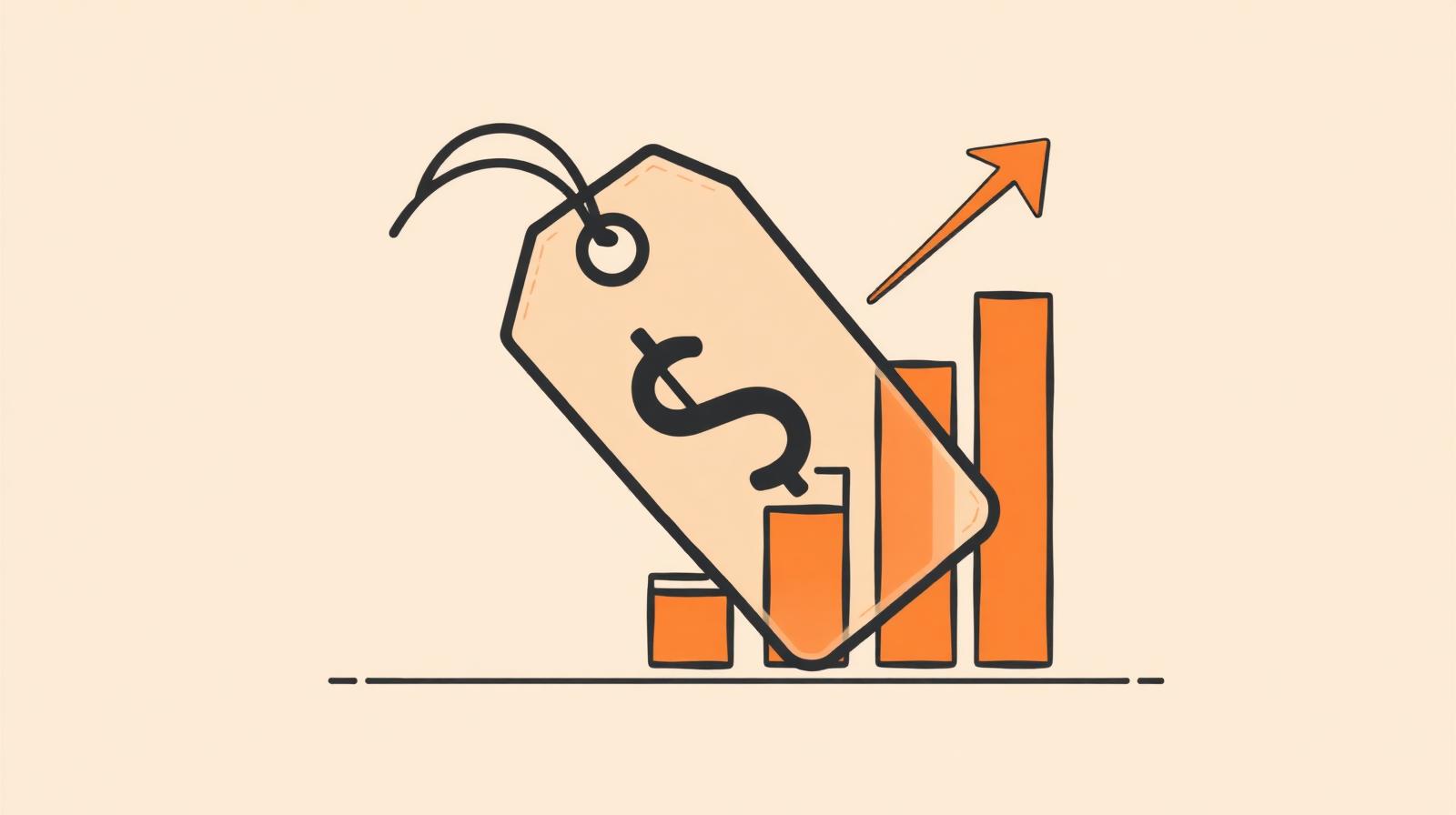
You know the customers. The ones you signed two years ago, back when fuel was cheaper, insurance was cheaper, and you were hungrier. They're lovely. They pay on time. And every fortnight you clean their house or mow their lawns at a rate that no longer stacks up.
You've thought about raising the price. Then you've pictured the awkward conversation, imagined them ringing around for someone cheaper, and decided to leave it another few months.
Here's the thing: leaving it isn't the safe option. It's the expensive one. And the conversation you're dreading is far smaller than it looks — once you've done the maths.
If you haven't raised prices in two years, you've already taken a pay cut
This isn't a feeling. It's arithmetic. Stats NZ recorded annual inflation of 7.2% in 2022 and 5.7% in 2023, and it's still running at 3.1% in the year to March 2026 — with electricity alone up 12.5% in the past year. Compound those years together and a price you set in early 2022 has quietly lost around a fifth of its real value.
Your input costs tell the same story. The adult minimum wage has climbed from $21.20 in April 2022 to $23.95 from April 2026 (MBIE) — a 13% rise that matters the moment you put anyone on the tools. And Inland Revenue's own measure of what it costs to run a vehicle, the Tier 1 kilometre rate, jumped from $1.04 to $1.20 per kilometre for the 2025–26 year. That's a 15% increase in one year, driven by real fuel, insurance and maintenance costs.
13%
Rise in the NZ adult minimum wage, April 2022 to April 2026 (MBIE)
+15%
Increase in IRD's Tier 1 vehicle running cost rate in a single year, to $1.20/km (Inland Revenue, 2025–26)
12.5%
Electricity price increase in the year to March 2026 (Stats NZ CPI)
$47/hr
Average advertised house cleaning rate across five NZ cities (Maid2Match survey, Feb 2026)
So if your rate hasn't moved since 2022, you're not holding prices steady. You're funding your customers' inflation out of your own margin.
It's also worth benchmarking against the market. A February 2026 survey of advertised rates across Auckland, Wellington, Christchurch, Hamilton and Tauranga put the average house cleaning rate at around $47 per hour, with company rates commonly reaching $55–70 in Auckland. If you're still charging $38 because that's what you charged when you started, you're not competitive — you're underpriced.
The maths: you can afford to lose customers (here's how many)
The fear behind every delayed price increase is the same: "what if they all leave?" So let's put a number on it.
Say you've got 40 recurring customers paying $100 a visit — illustrative numbers, but run your own through the same sums. That's $4,000 per round of visits. Now raise prices 15%, to $115. If every single customer stays, you're making $4,600 for exactly the same work.
But suppose some leave. At $115 a visit, you only need 35 customers to earn slightly more than your old $4,000. In other words, you can lose 5 of your 40 — one in eight — and come out even on revenue while doing 12% fewer jobs. Less fuel, less time, fewer products used. On profit, you're ahead before you've replaced a single one of them.
And in practice, you almost never lose one in eight. Simon-Kucher's 2025 Global Pricing Study found 80% of companies passed their cost increases through to customers, and their consultants' consistent finding from running price increase campaigns is that the fear of churn is usually far larger than the churn itself.
One more uncomfortable truth: the customers most likely to leave over a $15 increase are usually the ones who haggled hardest at the start, add the most friction, and squeeze your schedule the most. Losing a bottom-tier customer at your new rate isn't a failure. It's a slot freed up for someone who values the work.
Decide the increase: small and annual beats big and rare
The worst pricing strategy in home services is the most common one: hold prices flat for four years out of fear, then hit everyone with a 25% catch-up jump that genuinely does sting. Big, rare increases feel like a betrayal. Small, regular ones feel like the weather.
A simple framework:
For most of your book: an annual increase of 5–8% roughly tracks your real cost movements in the current environment and stays well under the threshold anyone re-quotes over. Pick a date — 1 September, 1 April, whatever suits your cash flow — and review every year on that date, whether or not you change anything.
For your badly underpriced legacy customers: don't try to fix a $30 gap in one letter. Step it: a larger increase now (10–15%), and tell them plainly you'll review again next year. Honest staging beats one brutal correction.
For new customers: quote at your new rate immediately. There is no reason a customer you signed this month should inherit 2022 pricing. If new work keeps saying yes at the higher rate, that's your proof the market has already moved — and your confidence for repricing the back book.
How to tell them: notice that doesn't apologise
The delivery matters more than the number. Three rules: put it in writing, give 3–4 weeks' notice, and state it as a decision — not a request for permission.
Here's a template for recurring residential customers:
Hi Sarah — a quick note about pricing. From 1 September, your fortnightly clean will be $115 (currently $100). Costs across fuel, insurance and supplies have risen significantly over the past couple of years, and this change keeps the service sustainable at the standard you're used to. Nothing else changes — same day, same team, same job. Thanks as always for having us — see you Thursday. — Mike
Notice what's not in there. No "unfortunately". No "I hate to do this". No three paragraphs about the economy. No "let me know if that's a problem" — which invites a negotiation you didn't need to have. You state the new price, the date, the one-line reason, and you reaffirm the relationship. Done.
For commercial customers on contracts, go slightly more formal and anchor it to a review cycle: "As part of our annual pricing review, from 1 September our rate for your weekly service will be $X." The phrase annual pricing review is doing quiet work here — it tells them this is a system, not a mood, and sets the expectation that next year there'll be another one.
The operational side matters too. Once notices are out, every quote, recurring booking and invoice needs to reflect the new rate from the effective date — because nothing undermines a confident price increase like accidentally invoicing three customers at the old price in October.
Invoicing that keeps up with your pricing
Update a recurring job's rate once and every future invoice follows — no old prices slipping through.
Handle the pushback without caving or discounting
Most customers will reply with nothing, or "no worries, thanks for the heads up". A few will push. Have your answers ready so you don't improvise your way into a discount.
"That's a big jump." — "It's the first change since [year], and it reflects what's happened to costs since then. I'd rather adjust it properly than cut corners on the job."
"Can you do anything on the price?" — Don't discount the rate; trade scope if you must. "The rate's firm, but if budget's the issue we could look at moving from weekly to fortnightly." You've kept your price integrity and given them a genuine option.
"I'll have to think about it / get other quotes." — "No problem at all — the new rate takes effect on the 1st either way, and we'd love to keep looking after you." Warm, unbothered, firm. Chasing them with a better offer teaches every customer that your prices are negotiable if they just threaten to leave.
If someone does leave, let them go graciously. A good chunk of price-increase leavers come back within a few months once they've discovered what "cheaper" actually gets them — and a gracious exit leaves that door open.
What to do this week
Pull up your customer list and write three numbers next to each name: what they pay now, what you'd quote that exact job today, and the gap. That single exercise usually ends the internal debate — the gap does the arguing for you.
Then set your increase (5–8% for most, staged for the badly underpriced), pick an effective date 3–4 weeks out, and send the notices in one sitting. Not one nervous conversation at a time over three months — one afternoon, one template, everyone at once. Update your recurring bookings and invoice rates the same day so the system enforces the decision for you.
And before you close the laptop: put "pricing review" in your calendar for the same week next year. The first increase is the hard one. Every one after that is just admin.
Keep reading
cleaning
How to price your cleaning jobs so you actually make money
Most cleaning businesses underprice because they quote from the gut. Here's a real formula to set rates that cover your costs and leave you ahead.
hiring
How to hide pricing from your first hire (and what to share)
Hiring your first employee? Here's exactly what pricing and customer data to hide, and what to share, so you don't lose control of your business.

quoting
How to price a job you've never done before
A practical guide for NZ and AU service businesses to estimate labour, materials, and risk when quoting unfamiliar work.